
Ramp & Car Park De-Icing
Ramp & Car Park Heating - Safe Vehicle Access in All Conditions
Icy ramps are among the most preventable causes of vehicle incidents and commercial insurance claims. ARC designs embedded electric ramp heating systems that activate automatically - before surface conditions become dangerous.

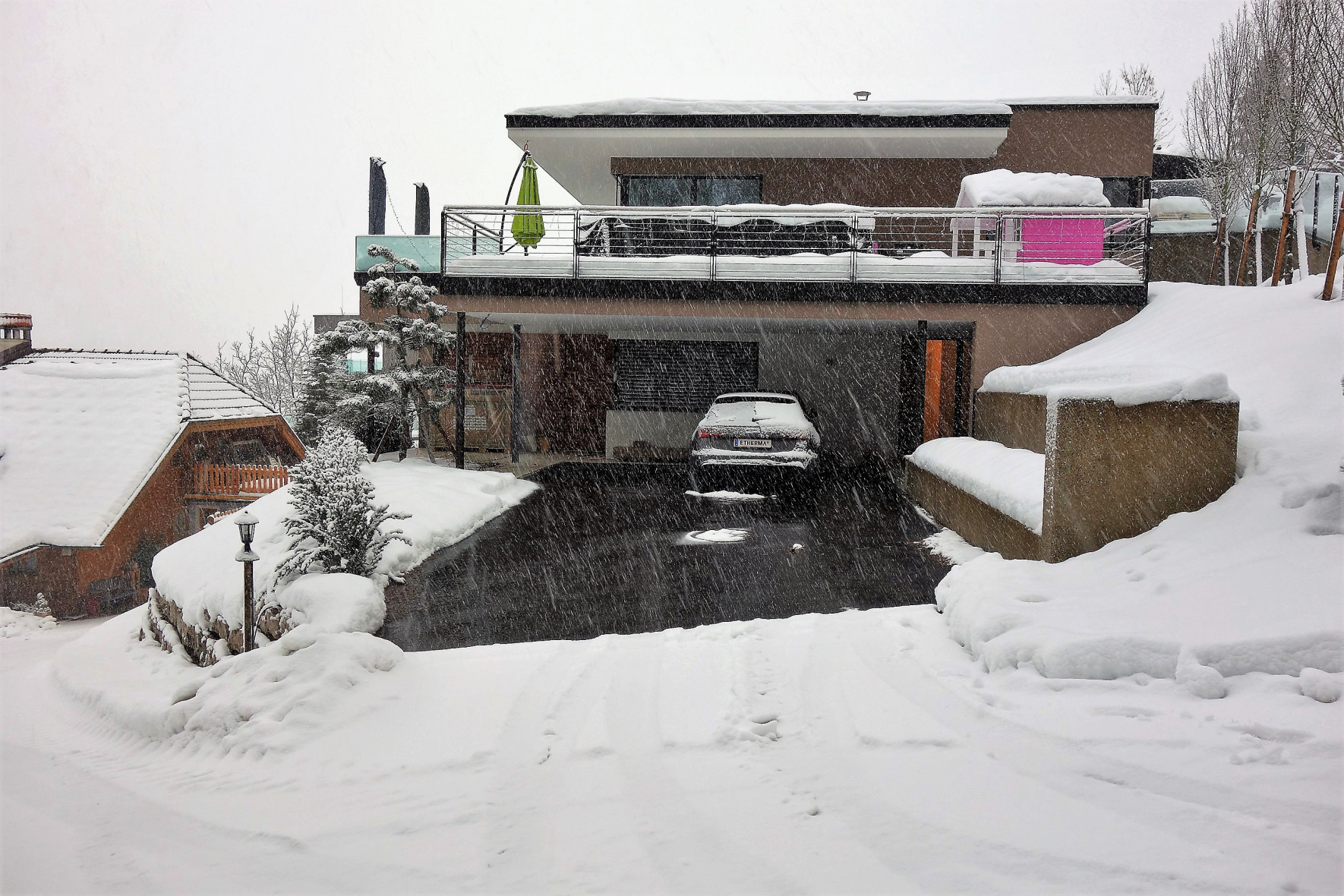
Why ramps are the highest-risk frost surface on a commercial site
The geometry amplifies the risk. An iced incline with no escape route means a skidding vehicle has nowhere to go. In a confined car park ramp - with barriers, walls, and a significant descent or ascent angle - a loss of traction at low speed causes vehicle damage and personal injury. The Occupiers' Liability Act 1984 places a clear duty of care on commercial premises operators to address foreseeable hazards. An iced ramp is a foreseeable hazard.
Manual gritting is not a reliable operational response for ramps. Salt washes from the inclined surface rapidly with vehicle movement, requiring frequent reapplication. The presence of vehicles makes manual access hazardous. And in many locations - hospital drop-off zones, hotel entrances, multi-storey car parks with confined ramp geometry - manual intervention during operational hours is impractical. Automatic embedded heating removes the dependency on manual response entirely.

How electric ramp heating works
Electric heating mats or cables are embedded in the ramp structure - in the concrete, asphalt, or mastic asphalt surface course - during construction or resurfacing. Elements are positioned at the correct depth for the surface type: 7mm for BRS in concrete or rolled asphalt; within the base asphalt course for GSN in mastic asphalt.
Temperature and moisture sensors are installed flush with the ramp surface. When the eFROST controller detects that surface temperature is approaching freezing AND moisture is present, heating activates. On dry-cold nights - when the surface cannot ice without surface water - the system remains off. The result is automatic frost prevention: the surface does not reach the temperature at which ice forms, so ice does not form. No salt, no manual intervention, no monitoring dependency.
The right technology for your ramp surface
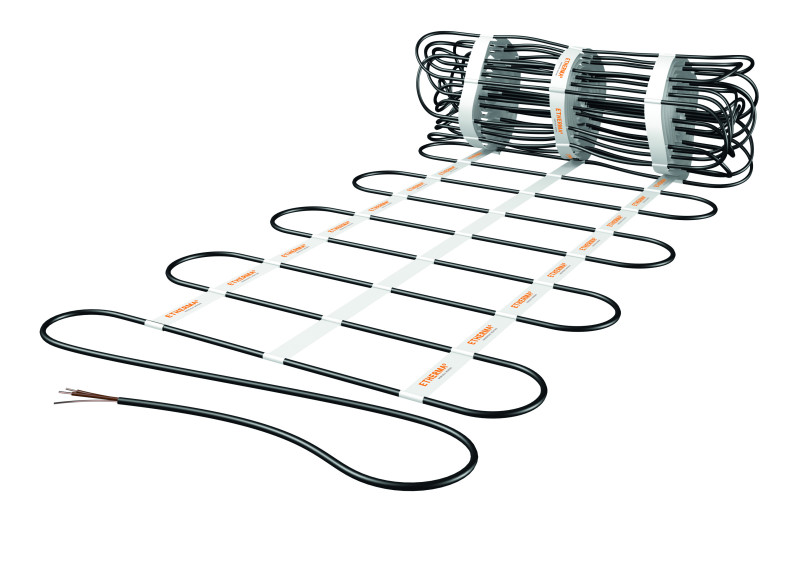
BRS - Concrete & Rolled Asphalt
The standard specification for ramp surfaces in new-build or resurfaced concrete and rolled asphalt construction. At 240–400 W/m² with IP X7 waterproof rating, BRS provides full snow-melting power density across the ramp plane. The 7mm installation depth positions the element close to the surface for fast thermal response. Available in single-phase and three-phase configurations for large ramp areas. When to specify: New-build or resurfaced concrete ramps | Rolled asphalt ramps | Compacted asphalt access roads
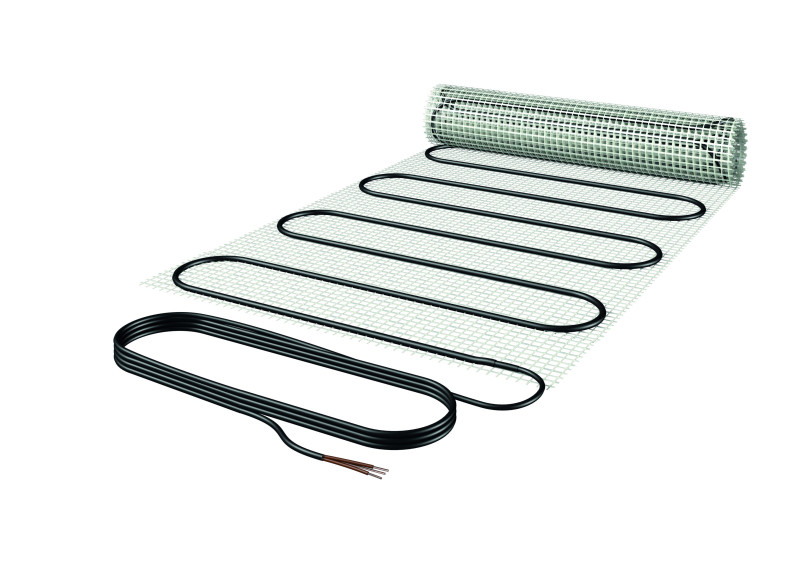
GSN - Mastic Asphalt (Required for This Substrate)
The only correct specification for ramp surfaces finished in mastic asphalt. Mastic asphalt is a preferred wearing surface for commercial car park ramps due to its durability and self-sealing properties - but its application temperature (200°C+) destroys standard heating mats. The GSN is rated to 240°C and withstands the full conditions of hot mastic asphalt laying. It is also resistant to acids, alkalis, and vehicle fluids - essential in car park environments. No standard heating mat - including BRS - is compatible with mastic asphalt laying conditions. This is a non-negotiable substrate requirement. When to specify: Any ramp surface finished in mastic (hot-applied) asphalt. No alternative exists for this substrate.
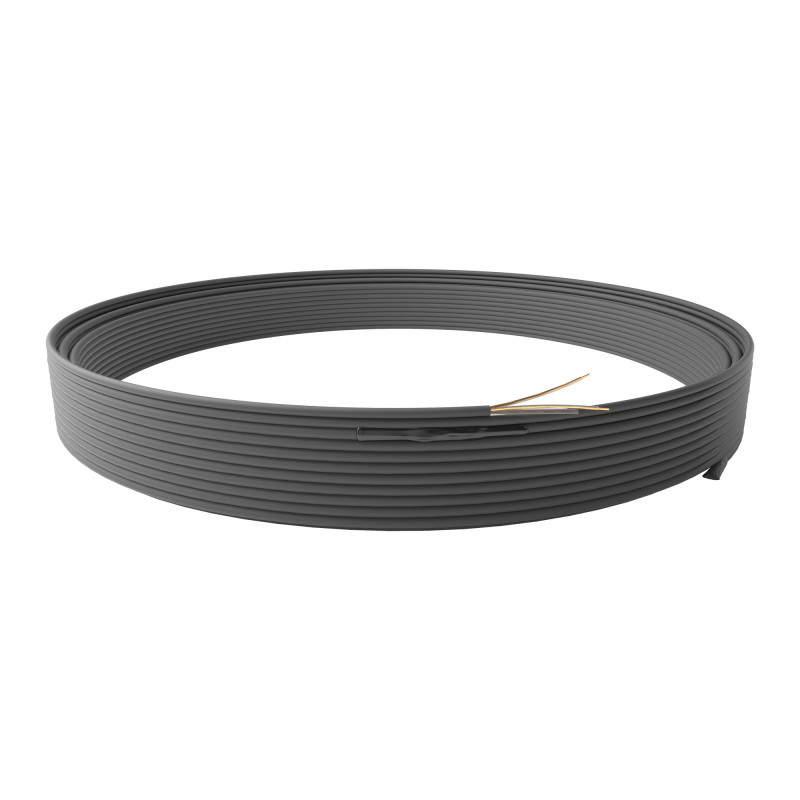
BRLH - Irregular Geometry & Mortar/Sand Bed Substrates
Where ramp geometry is curved, approach roads have variable-width sections, or surfaces use sand bed or mortar bed construction, the BRLH free-lay cable allows element spacing adjustment to match the heat load calculation for the actual area. The only product in the ETHERMA frost protection range compatible with sand and mortar bed substrates. When to specify: Curved ramp approaches | Block-paved access areas | Sand or mortar bed construction | Areas with variable geometry requiring non-standard element spacing
ARC engineers specify the correct product based on your surface construction. Contact us before designing - substrate identification determines product selection, not the reverse.
Automatic control - heating only when the ramp needs it
eFROST controllers activate the ramp heating system based on two independent inputs - surface temperature and moisture/humidity. This dual-parameter approach ensures the system operates only under conditions that can produce ice: a cold, moist surface. Dry-cold conditions - the majority of cold winter nights in the UK - do not trigger heating.
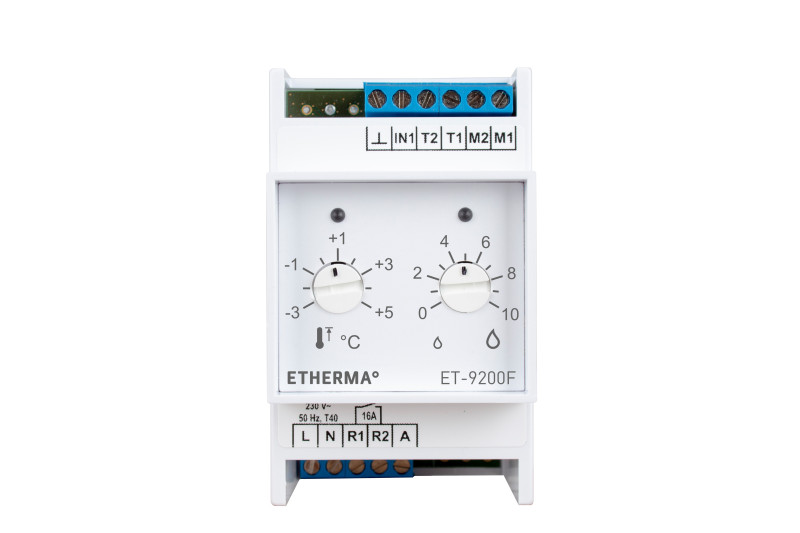
ET-9200F:
Compact DIN-rail-mounted single-zone controller for smaller ramp installations or individual access zones. Correct specification for single ramp entrances and straight-geometry ramps with one sensor position.
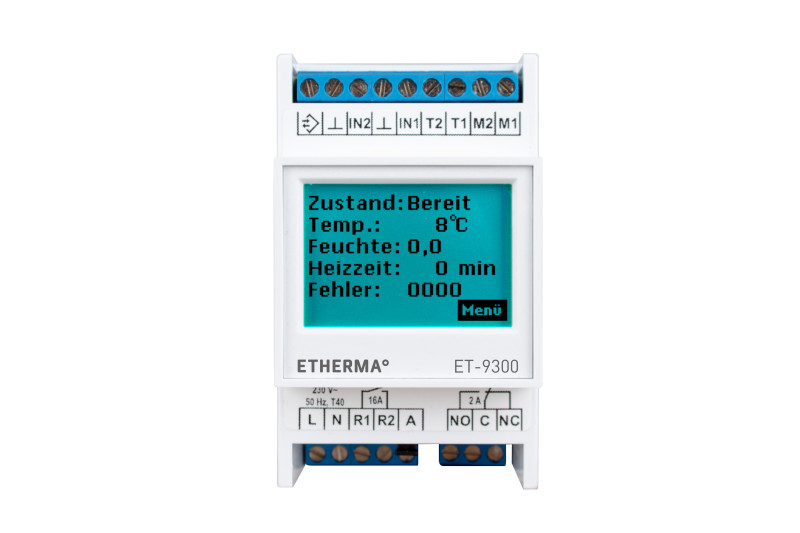
ET-9300:
Multi-zone flagship controller with up to 8 sensor inputs. The correct specification for multi-level car parks, dual ramp entrances, sites combining ramp and walkway heating, or large single-ramp areas requiring multiple sensor points. Touch display with clear zone status indication.

ET-9380 WLAN MODULE:
Added to ET-9300 for remote monitoring and management via the ETHERMA eFROST online portal. Enables facilities managers to check system status, receive fault alerts, and access performance data remotely - without site visits. Weather-data integration allows automatic pre-activation based on forecast conditions.
Where ramp heating is specified
Underground car park entrances and exits
Iced portal approaches are a high-frequency incident location; automatic heating removes the risk 24 hours a day
Multi-storey car park helical ramps
Largest energy demand application; ET-9300 with multiple sensors is the standard specification
Hotel and hospitality vehicle access
Guest safety and brand reputation make manual salting an inadequate response
Hospital and NHS facility drop-off ramps
24-hour traffic; manual intervention is impractical; visitor and patient incident liability is significant
Loading bay approaches
Operational continuity; HGV incidents on iced approaches carry major vehicle, cargo, and structural damage consequences
Industrial site access roads
Remote locations where manual gritting response time is inadequate; site safety compliance
What a correctly specified ramp heating system delivers
Technical Benefits:
BRS and GSN are IP X7 rated
Certified for full submersion in water. Ramp drainage pooling and snowmelt volumes do not compromise element integrity
Heat load calculated and matched to exact surface area and substrate
No under-specification, no unnecessary over-capacity
Element depth
Positioned for correct thermal response time for the surface type
Operational Benefits:
Automatic activation and deactivation -
no manual monitoring requirement, no call-out dependency
No surface salt or chemical application -
eliminates salt corrosion on vehicles, drainage contamination, and concrete surface deterioration over time
Activates in the early hours before site staff arrive -
not reactively after the first incident reports the hazard
Commercial Benefits:
Documented automated frost protection is a defensible response to HSE duty-of-care requirements
Admissible evidence in any liability assessment
Eliminates reactive ramp closure costs -
Lost parking revenue, reputational impact, and the operational disruption of managing a closed access point
Reduces insurance claim frequency
And strengthens the argument for premium negotiation
ARC Assured - from ramp survey to annual service
ARC Assured covers your ramp heating system from the first site visit through the life of the installation. ARC surveys the ramp, identifies the substrate, calculates the heat load for the correct power density, and specifies the right product from the ARC Frost Protect range - BRS for concrete and rolled asphalt, GSN for mastic asphalt, BRLH for irregular geometry and sand or mortar bed construction. ARC then supplies all components, installs the system, and commissions it with full resistance testing and a written report.
After installation, ARC Assured annual maintenance confirms that the system is ready to perform before each heating season begins.
Survey and substrate identification:
Confirms correct product selection from the ARC Frost Protect range before any material is ordered
Heat load calculation:
Correct power density matched to ramp area, traffic loading, and design ambient temperature
Supply and installation:
All components installed to ETHERMA standard, with numbered mat layout and photo documentation
Commissioning:
Element resistance test, insulation resistance to earth, eFROST control calibration and seasonal set-up, written commissioning report
Annual service:
Pre-season resistance testing of all heating elements, eFROST sensor check, control recommissioning, written inspection report
Ramp heating systems protect surfaces with significant liability exposure. A documented installation record and a consistent annual inspection programme are the evidence base if the system is ever called into question in connection with an incident.
Yes, in most cases - but only where the existing surface is to be removed and reinstated as part of the retrofit programme. Heating mats must be embedded in the surface structure, not applied as an overlay. Where a full surface removal is not planned, trace heating of the ramp drainage system and perimeter is possible, but embedded surface heating requires surface reinstatement. ARC will advise on the most cost-effective approach for your existing ramp construction.
A typical single car park ramp entrance in the UK, correctly controlled with an eFROST dual-parameter system, might consume 3,000–8,000 kWh per heating season - depending on ramp area, substrate, climate exposure, and installed power density. Running the same system without moisture-sensing control can triple this figure. ARC provides detailed running cost estimates as part of the specification process.
No. Correctly installed BRS and GSN mats are embedded at the specified depth for their surface type and do not affect structural integrity. Both products carry IP X7 waterproof rating and are rated for the thermal cycling of freeze-thaw environments. The GSN is rated to 240°C - withstanding the full application temperature of mastic asphalt.
Yes. The ET-9300 eFROST control unit supports BMS integration. The ET-9380 WLAN module additionally provides standalone remote monitoring via the ETHERMA eFROST portal - accessible on any device with internet access. ARC will confirm integration protocol with your BMS at design stage.
The ET-9300 controller monitors circuit continuity and generates a fault alert if an element circuit fails. With the ET-9380 WLAN module installed, this alert is transmitted to the eFROST online portal - so your FM team receives notification without requiring on-site inspection. ARC Assured annual resistance testing identifies element degradation before failure occurs.
Get a Free Ramp Heating Survey and Specification
ARC will survey your ramp, identify the substrate, calculate the heat load, and specify the correct system from the ARC Frost Protect range - BRS, GSN or BRLH matched to your surface. No obligation. No generic product recommendations.
Survey Request Received
One of our ramp heating specialists will contact you within one working day to arrange your free site survey.