Building Envelope Protection
Fresh snow has a density of approximately 50–150 kg/m³. Wet, settled snow reaches 300–500 kg/m³. Commercial flat and low-pitch roofs - particularly structures built before current load standards - can reach their design limit within hours of a heavy snowfall. A loaded roof that exceeds structural capacity is not a slow failure. It is an acute structural risk with potentially catastrophic consequences for building integrity, contents, and any personnel below.
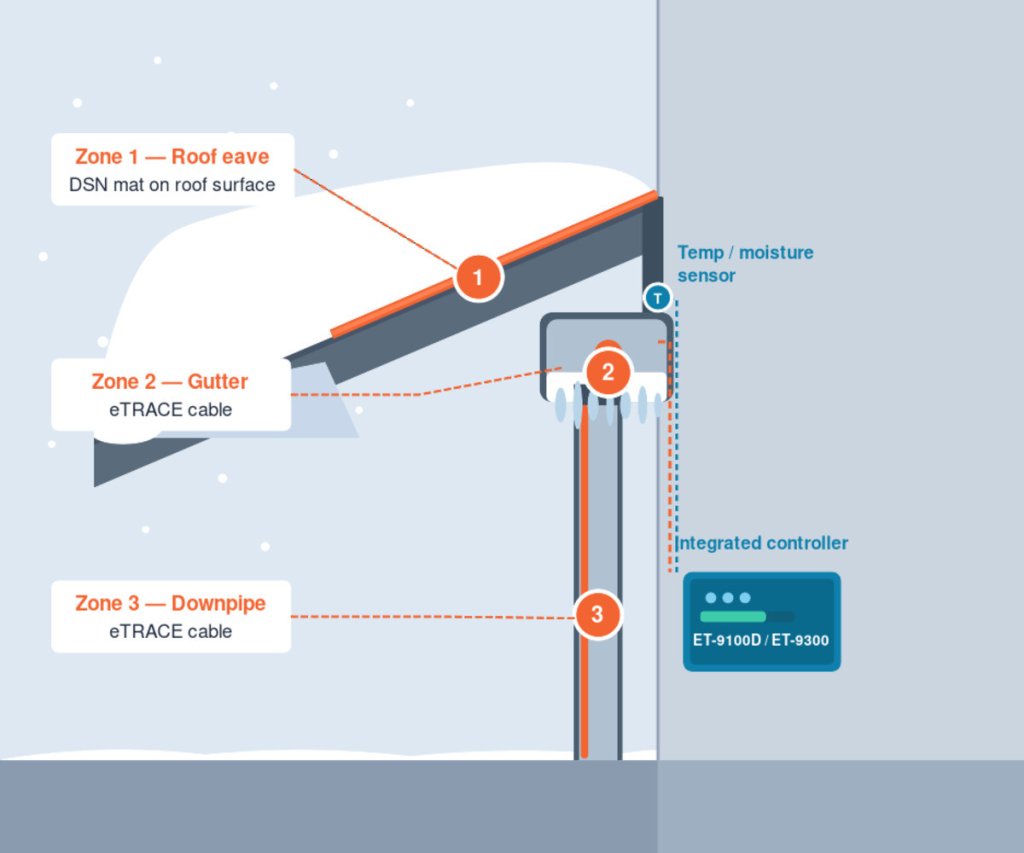
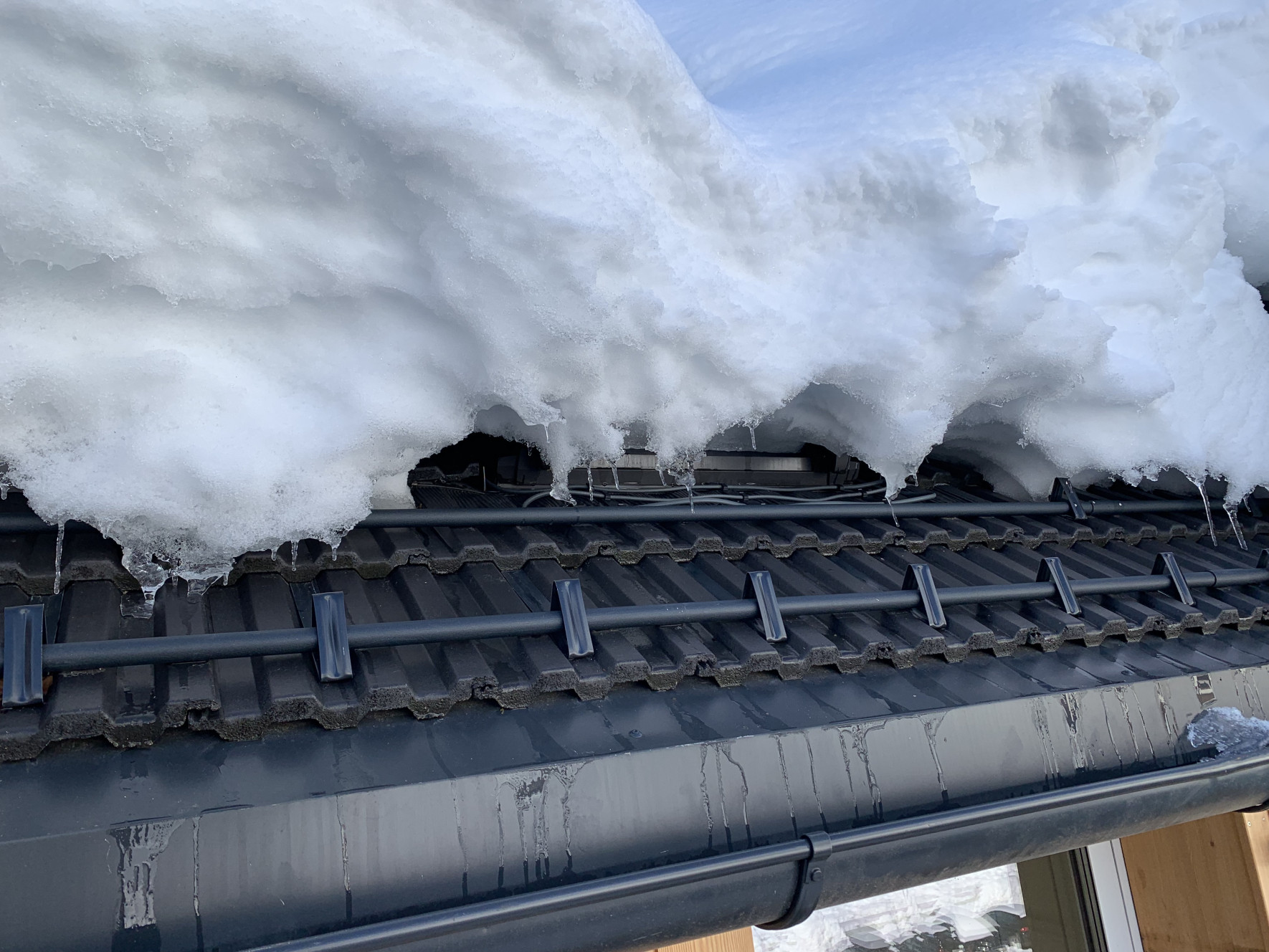
Meltwater from upper roof areas - warmed by internal building heat conducting through the roof - flows toward the eaves and refreezes when it meets cold external air. The resulting ice dam creates a barrier preventing further drainage. Subsequent meltwater backs up behind the dam and forces its way under the roofing membrane, flashings, and into the building fabric. Ice dam water ingress is a major cause of commercial building insurance claims and is frequently attributed to the absence of eaves frost protection.
Gutters that freeze solid cannot carry snowmelt volumes. Overflow causes water damage to external walls, facade materials, and internal spaces. Where gutters are positioned above foot or vehicle traffic areas, the consequences extend further: gutters can collapse under ice weight, and icicles forming from overflow create a recognised public safety hazard below. The liability exposure from a falling icicle above a public footway is significant.