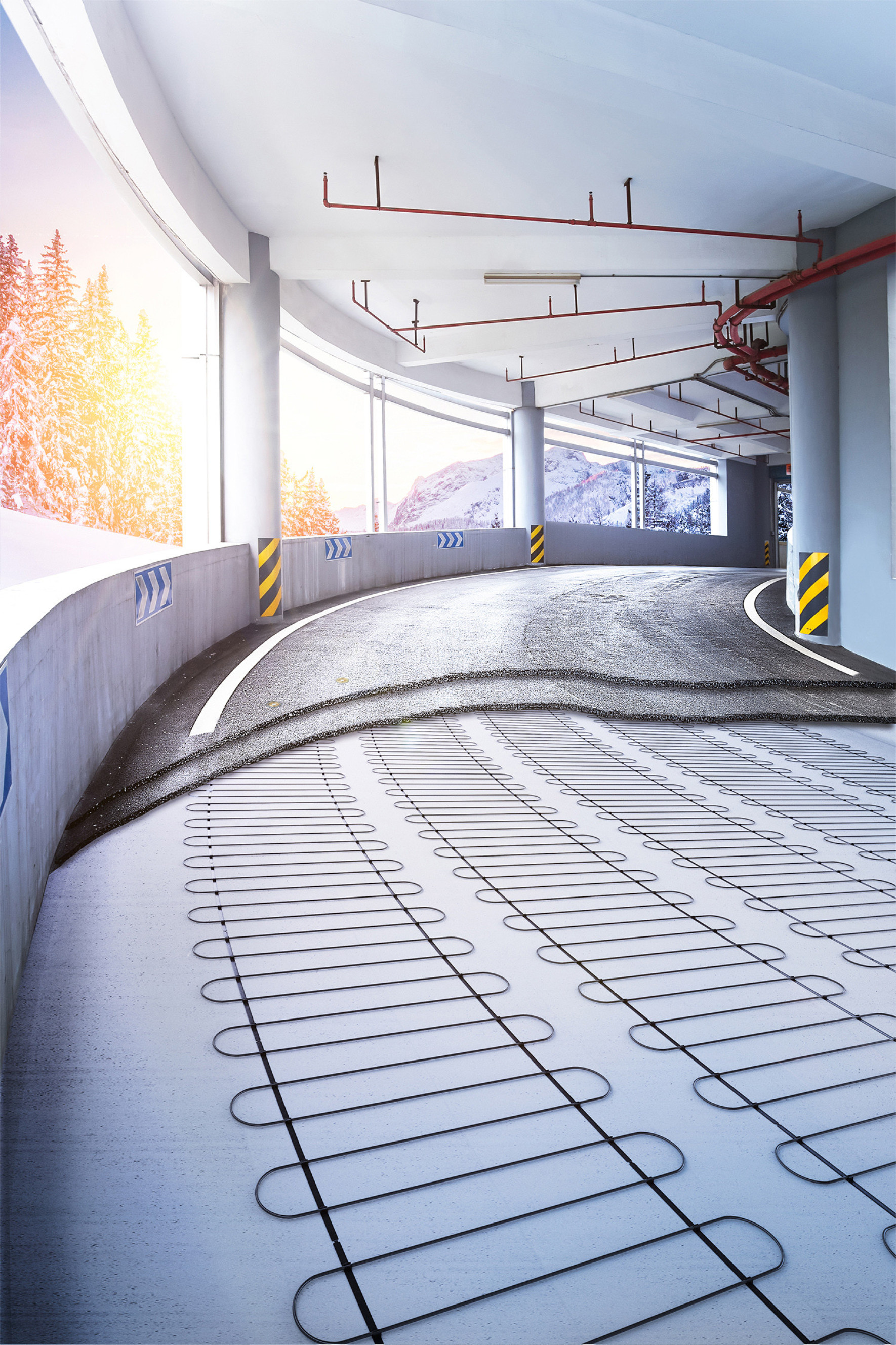
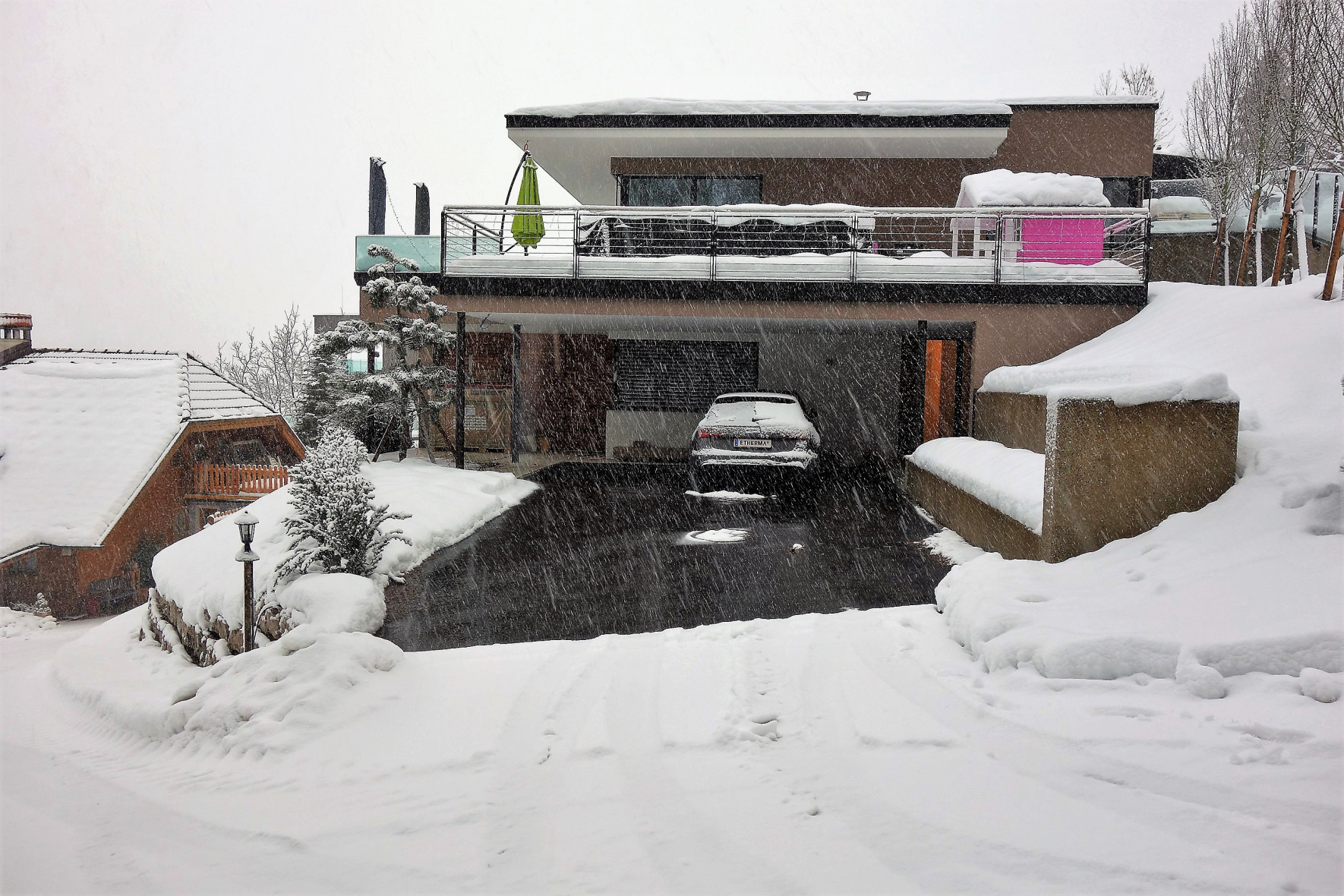
Commercial Snow & Ice Melting
Driveway & Walkway Heating - Ice-Free External Surfaces, Automatically
From hotel approach roads and retail car parks to industrial loading zones and public realm pedestrian routes: ARC designs electric snow and ice melting systems matched to the surface type, the traffic load, and the climate exposure - not to a standard product specification applied regardless of conditions.
Automatic embedded electric heating provides consistent, repeatable surface protection without manual intervention, without salt, and without ongoing consumable cost. It activates before staff arrive and before the hazard forms.
Specified for the surface - not just the temperature
The single most common cause of frost protection installation failure is substrate mismatch: a product specified without reference to the surface it will be installed in. Different surface constructions have fundamentally different requirements - different installation conditions, different substrate compatibility, and different power density requirements for the traffic load above.
ARC's approach is substrate-first. Before specifying a product, ARC engineers establish the surface construction: concrete, rolled asphalt, mastic asphalt, block paving, mortar bed, or other. Product selection follows from the substrate. The heat load calculation then determines the required power density based on surface area, design ambient temperature, and the performance objective - frost suppression or active snow melting.
This sequence - substrate, then product, then heat load - is what distinguishes a specification from a product sale.
Surface-matched heating technology
BRS - Concrete & Compacted Asphalt
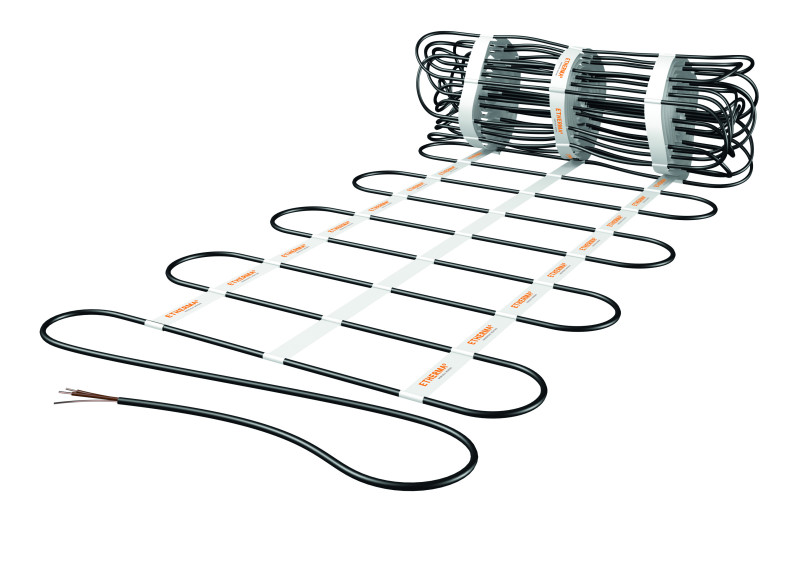
The primary specification for driveways, loading bay aprons, and car park surfaces in concrete or compacted asphalt construction. At 240–400 W/m² and IP X7 waterproof rated, BRS provides both frost suppression (lower power density for pedestrian maintenance zones) and full snow melting (higher density for vehicle access surfaces). The 7mm installation depth and IP X7 rating make it suitable for all UK surface water exposure conditions.
When to specify: New-build or resurfaced concrete driveways | Compacted asphalt vehicle access surfaces | Loading aprons | Commercial car park approaches
GSN - Mastic Asphalt (Required for This Substrate)
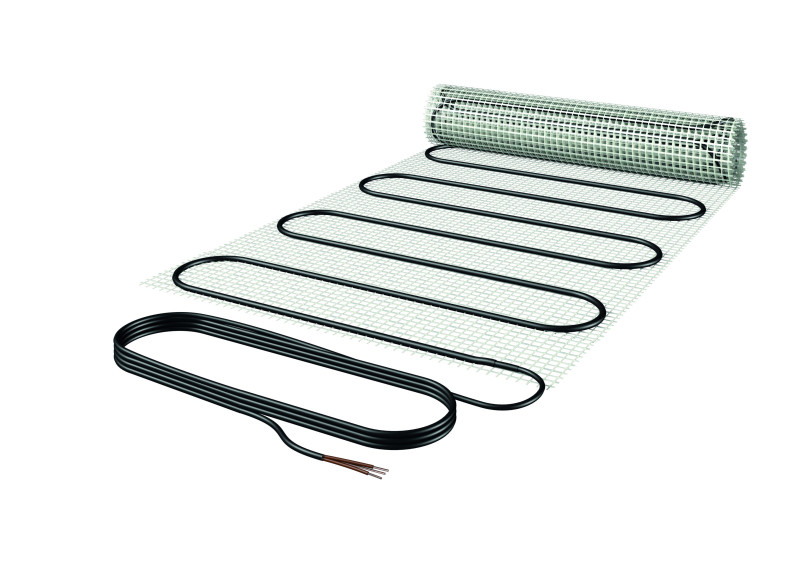
Required for any surface finished in mastic asphalt - common in commercial and industrial settings where wear resistance and self-sealing properties are prioritised. The GSN's heat resistance to 240°C is the specification-defining characteristic: no standard heating mat can survive mastic asphalt's application temperature. GSN is also resistant to the oils, vehicle fluids, and chemical cleaning agents typical of commercial surface environments.
When to specify: Mastic asphalt-finished driveways and vehicle areas. No alternative product is suitable for this substrate.
BRLH - Block Paving, Sand Bed & Mortar Bed Substrates
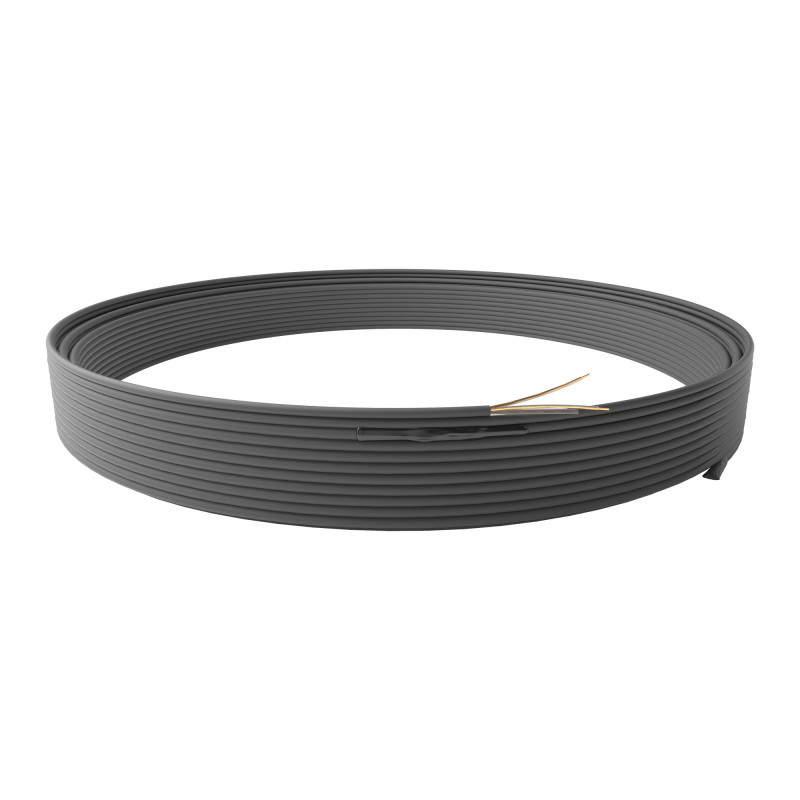
The free-lay cable format of BRLH makes it the only product in the ETHERMA frost protection range compatible with sand bed and mortar bed substrate construction - which covers the majority of block-paved commercial driveways, terraces, and public realm surfaces. Element spacing is adjusted to match the actual heat load calculation for irregular areas, and to navigate drainage channels, gullies, and surface furniture.
When to specify: Block paving in sand or mortar bed | Curved or irregular driveways | Public realm surfaces with variable geometry
eFLOOR STRONG - Pedestrian Walkways & Terraces
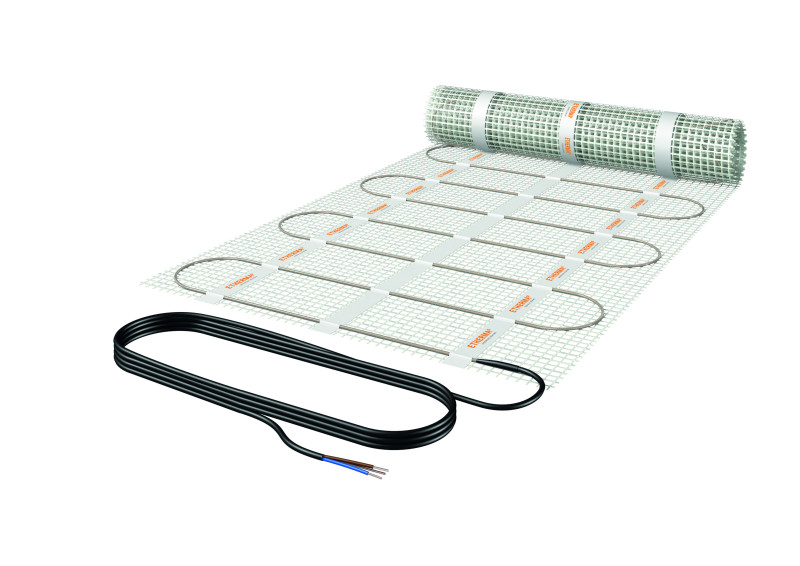
For surfaces with pedestrian-only traffic where the objective is frost suppression rather than active snow melting, eFLOOR STRONG at 100–300 W/m² provides appropriate intensity at reduced running cost. The TPCP (thermoplastic cross-linked polyolefin) insulation resists the chemical cleaning agents used on commercial walkways, terraces, and hospitality outdoor areas. At 4mm installation depth, it is compatible with thinner surface finishes where the standard 7mm BRS depth would be inappropriate.
When to specify: Pedestrian walkways | Hotel entrance paths | Outdoor hospitality terraces | Areas where 7mm installation depth is not achievable
Not sure which product applies to your surface? Tell us the surface construction and we'll specify the correct system.
Intelligent control - energy spent only when conditions demand it
eFROST dual-parameter control activates heating when surface temperature approaches freezing AND moisture or humidity is detected. For large driveways or sites with multiple zones - driveway, loading bay, pedestrian walkway - the ET-9300 manages up to 8 sensor inputs from a single control unit, enabling proportional zone management. For smaller walkway applications, the ET-9200F provides compact single-zone control for surfaces with a single heating circuit.
The ET-9380 WLAN module connects the system to the eFROST online portal for remote monitoring and weather-integrated automatic pre-activation - the system responds to forecast conditions, not just measured surface conditions. For FM teams managing multiple sites, this removes the requirement for site visits to verify system operation.
Correctly controlled driveway heating consumes electricity for a fraction of the winter period - the fraction when conditions actually require it. This is the difference between a specification and a running cost problem.
Where driveway and walkway heating is specified
Guest experience and safety; manual salting is incompatible with a prestige entrance
High footfall during adverse weather when visitor risk peaks
HGV access in iced conditions carries significant vehicle, cargo, and personnel risk
Local authority and public sector duty of care for footways, town centre routes, and public squares
Hotel, restaurant, and leisure facility hard landscaping
wet surface combined with freezing temperatures requires robust frost suppression
Aircraft access and patient/personnel transfer surfaces (BRS or GSN appropriate to surface construction)
What correctly specified driveway and walkway heating delivers
Technical:
Product selection matched to substrate -
no risk of installation failure from material incompatibility
IP X7 waterproof rating
across BRS, GSN, and BRLH
TPCP insulation in eFLOOR STRONG
for chemical exposure resistance in commercial cleaning environments
Environmental:
Salt-free and chemical-free operation -
no surface staining, no corrosion of adjacent metalwork or drainage gullies, no chloride contamination of drainage systems
Energy consumption proportional to actual conditions -
not continuous
Operational:
Consistent surface protection
regardless of staff availability, shift patterns, or response time
Activates before ice forms -
not after the first incident identifies the hazard
No salt procurement,
storage, disposal, or application cost
Commercial:
Documented automated frost protection
supports liability defence more robustly than manual gritting records
Eliminates the consumable and labour cost
of manual salting programmes over a 30-year asset life
Running cost depends on the surface area, installed power density, and the control strategy. A correctly controlled commercial driveway heating system using eFROST dual-parameter sensing operates for approximately 150–400 hours per heating season in UK conditions. A 200 m² driveway at 300 W/m² with correct control might consume 9,000–24,000 kWh per heating season. This compares favourably to the cumulative cost of a commercial salting programme - material, labour, and damage - over the same period. ARC provides running cost estimates during specification.
Under block paving in sand or mortar bed construction, yes - BRLH is the correct specification. Pattern imprinted concrete (PIC) and resin-bound surfaces require assessment on a case-by-case basis; surface reinstatement specification must be confirmed at design stage. ARC will advise based on your surface construction details.
A correctly specified system at 300–400 W/m² will typically clear a light snowfall of 5–10cm within 30–60 minutes under UK ambient conditions. Heavier snowfall clears progressively as the system melts from the surface upward. Systems with eFROST weather-forecast integration can pre-activate before snowfall begins - reducing peak accumulation and clearing time.
Not as an embedded system - heating mats must be installed within the surface construction. However, partial renovation removing and reinstating a surface course only, without sub-base works, is often achievable at significantly lower cost than full reconstruction. For surfaces that cannot be excavated, trace heating of perimeter drainage and gully channels is an alternative partial solution. ARC will assess your site.
For most commercial applications, planning permission is not required - embedded surface heating is structural rather than architectural. In conservation areas or where external appearance might be affected, pre-application advice from the local planning authority is recommended. Listed building consent requirements should be checked for properties in listed building curtilages. ARC can advise based on your site.
Get a Free Survey and Specification for Your Driveway or Walkway
The correct specification starts with the surface. ARC surveys your driveway, walkway or external area, identifies the substrate and surface construction, and designs the system from the ARC Frost Protect range accordingly. No guesswork.
Survey Request Received
One of our frost protection specialists will contact you within one working day to arrange your free survey.