Consent

This site uses third party services that need your consent. Learn more

Skip to content
EX
VAT
INC
VAT
Shop now
Login

Article

What Does It Cost to Heat a Hot Yoga Studio?

If you are planning a hot yoga studio, one of the most important questions you will face early on is: how much will it actually cost to heat? It is a question that touches both your build budget and your long-term running costs and getting it wrong can be an expensive mistake. 

Hot yoga studios are typically maintained at temperatures between 35°C and 40°C, which is significantly warmer than a standard commercial space. That level of sustained heat places unusual demands on a heating system. Traditional approaches, including fan heaters, oil-filled radiators, or standard HVAC systems, often struggle to reach and hold these temperatures efficiently, leading to high energy bills and uneven heat distribution. 

As a result, many studio owners are now looking at infrared heating as a more practical and energy-conscious solution. This article covers what it actually costs to install and run infrared heating in a hot yoga studio, and what you need to know before committing to a system. 
What Temperature Does a Hot Yoga Studio Need? 

Most hot yoga disciplines, including Bikram, hot Vinyasa, and Moksha, require a room temperature between 35°C and 40°C, with humidity levels typically between 40% and 60%. These conditions are intentional: the heat is designed to warm muscles, support deeper stretching, and promote detoxification through perspiration. 

To sustain these conditions reliably, your heating system must be capable of: 


Achieving the target temperature before the first class begins

Maintaining consistent heat throughout the session, even as bodies cool the room through perspiration

Distributing warmth evenly across the floor area, avoiding hot or cold spots

Operating efficiently over long hours, often across multiple sessions per day

Traditional heating systems that heat air, such as fan heaters or forced-air HVAC, tend to lose efficiency quickly when doors are opened, heat rises to the ceiling rather than staying at body level, and energy consumption can be disproportionately high. This is why radiant heating has become the preferred approach for professional hot yoga spaces. 

What Affects the Cost of Heating a Hot Yoga Studio? 

There is no single fixed price for a hot yoga heating system. Costs vary depending on several practical factors, and it is important to understand each one before requesting a specification or quote. 

Studio Size

The floor area of your studio is the primary driver of how much heating capacity you need. A small studio of 40–60m² will require far fewer panels than a large 100m²+ space. Ceiling height also matters: rooms with high ceilings require more power to heat the same floor area effectively.

Insulation Quality

Insulation Quality  A well-insulated studio retains heat far more efficiently than a poorly insulated one. If your space has single-glazed windows, limited wall insulation, or a poorly sealed floor, your heating system will need to work harder and that increases both installation costs (more panels) and running costs (more energy).  Investing in good insulation before specifying your heating system will almost always reduce long-term costs. It is one of the most common areas where studio founders underestimate expenditure.

Number and Specification of Panels

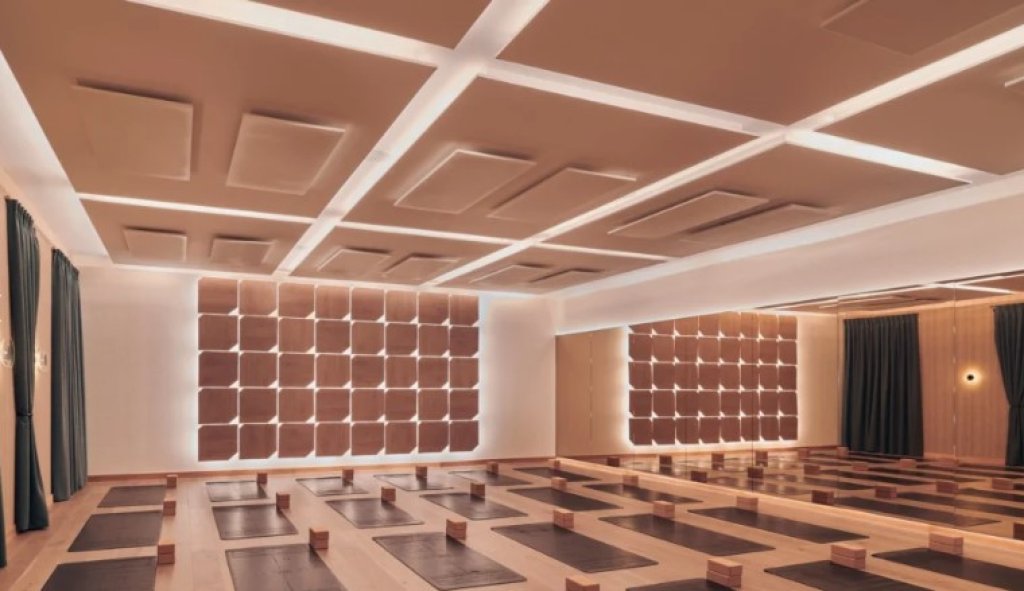
Infrared heating systems for hot yoga studios typically use commercial-grade radiant panels, often installed in the ceiling to allow heat to radiate downwards across the practice area. The number of panels required depends on the wattage of each unit and the total heat load needed for the space. A qualified installer will calculate this based on room size, ceiling height, insulation, and target temperature.

Control Systems

Programmable controls and zoning add cost to the initial installation but usually pay back over time through reduced energy waste. Smart thermostats and zoned systems allow you to heat the studio in preparation for a class without running the system unnecessarily between sessions.

Installation Costs

Installation costs include electrical supply work, panel mounting, wiring, and control system setup. For commercial spaces, you may also require an electrical supply upgrade to handle the load of a full heating system. It is advisable to factor installation into your budget from the outset, as it can represent a significant portion of the total project cost.

Typical Infrared Heating System Costs for Yoga Studios 

The following ranges are indicative for UK commercial installations. Actual costs will depend on the specific configuration, insulation levels, and local installation rates. Always obtain a site-specific specification and quote. 

Studio Size Approx. System Cost (Supply) Typical Install Cost
Small: 40–60m² £3,000 – £6,000 £800 – £1,500
Medium: 60–100m² £6,000 – £10,000 £1,500 – £2,500
Large: 100m²+ £10,000 – £18,000+ £2,500 – £4,500+

Note: These figures are indicative only. System costs vary based on panel specification, ceiling height, insulation quality, and specific building requirements. A detailed site survey is recommended before budgeting.

For a precise specification, ARC recommends a consultation to assess your space properly before any costs are confirmed. 


Why Infrared Heating Works Well for Hot Yoga 

Understanding why infrared works requires a brief explanation of how it differs from conventional heating. Traditional heating systems warm the air in a room. As warm air rises, heat accumulates at ceiling level rather than at body level — which is inefficient in any setting, and especially so when you need sustained warmth across a practice space. 

Infrared heating works differently. Rather than warming the air, infrared panels emit radiant energy that directly warms surfaces, objects, and people in its path. The effect is similar to standing in sunlight: the warmth is absorbed by the body directly, rather than being carried to you via heated air. 

For hot yoga specifically, this has several practical advantages: 

Heat is delivered at body level, creating a more consistent and comfortable practice environment

There is no air movement from fans or vents, which reduces the drying sensation often associated with forced-air systems

Warm-up times are typically shorter, as panels reach operating temperature quickly

Radiant heat creates a more even thermal environment, reducing the variation between warm and cool spots in the room

Humidity levels are easier to manage when air movement is minimised

For practitioners, the result is a room that feels warm without feeling airless — a significant quality consideration for any serious studio. 

For more detail on how the technology works, see our infrared heating systems for commercial spaces

Running Costs Compared with Traditional Heating 

Upfront installation cost is only one part of the financial picture. For a studio operating multiple sessions per day, the running cost of your heating system will be a recurring overhead throughout the life of the business.

Infrared vs Fan Heaters

Fan heaters are inexpensive to buy but expensive to run. They typically consume high amounts of electricity, heat air inefficiently, and struggle to maintain the sustained temperatures required for hot yoga. In a commercial setting, running multiple fan heaters continuously is rarely cost-effective.

Infrared vs Gas Heating

Gas heating can be cost-effective for large commercial spaces, but it is less suited to the precise temperature control and rapid warm-up requirements of a hot yoga studio. Gas systems also require flue installation and ongoing maintenance, and their long-term running costs are subject to gas price fluctuations.

Zoning and Control

One of the most significant advantages of a well-specified infrared system is the ability to zone heating effectively. Rather than heating the entire studio continuously, a zoned system can pre-heat the space ahead of a scheduled class, maintain temperature during the session, and reduce output in the intervals between bookings. Over a full week of classes, the energy savings from intelligent zoning can be considerable.

Exact running costs will vary depending on your studio's schedule, local electricity tariffs, and insulation performance. A properly designed system installed in a well-insulated studio will typically offer meaningfully lower running costs than an equivalent air-based system. 

See also: ARC heating solutions for studios for an overview of how these systems are specified for wellness spaces. 

Common Heating Mistakes When Building a Hot Yoga Studio 

Having designed heating systems for a range of studio environments, we see several errors made repeatedly at the planning stage. Avoiding these can save both money and disruption. 


1. Underestimating the Heating Load

The temperatures required for hot yoga are significantly higher than a standard commercial space. Many studio founders use general commercial heating guidance when specifying their system and end up with a system that cannot reach or hold the required temperature. Always specify your system based on target temperature, not standard room usage.

2. Poor Insulation

Insulation is the foundation of an efficient heating system. A studio with inadequate wall, floor, or ceiling insulation will lose heat rapidly, forcing the system to work harder and consume more energy. Address insulation before specifying heating it is far cheaper to improve at build stage than to retrofit later.

3. Installing Domestic Rather Than Commercial Systems

Domestic infrared panels are designed for intermittent use in residential settings. A hot yoga studio requires commercial-grade equipment rated for sustained high-temperature operation, with appropriate wiring, controls, and installation. Domestic equipment used in commercial environments can degrade quickly, void warranties, and create safety issues.

4. Heating Air Instead of People

Choosing a conventional forced-air system because it seems familiar is a common and costly mistake. Air-based heating in a hot yoga studio typically results in high energy bills, uneven heat distribution, and an uncomfortable practice environment. Radiant systems are specifically suited to the demands of this setting.

5. No Proper Consultation

Specifying a heating system without a site visit or proper heat load calculation is guesswork. The cost of getting it wrong, either in additional panels, system replacement, or ongoing energy waste, will almost always exceed the cost of a proper specification exercise at the outset.

Monthly running costs depend on your studio size, session schedule, insulation quality, and local electricity tariffs. A well-insulated, medium-sized studio running 20–30 sessions per week might expect to spend £300–£600 per month on heating, though this varies significantly. A proper energy assessment at specification stage will give you a more accurate projection. 

System sizing depends on floor area, ceiling height, insulation levels, and your target temperature. As a general guide, hot yoga studios typically require between 80W and 150W per square metre, though rooms with high ceilings or poor insulation will need more. A site survey and heat load calculation are recommended before committing to a system size. 

Yes. Commercial infrared heating panels operate at surface temperatures that are warm but not hazardous, and they produce no combustion byproducts. They are widely used in commercial wellness environments, spas, and sports facilities. Installations should be carried out by qualified electrical contractors in line with current UK regulations. 

Yes, provided the system is correctly specified for the space and the studio is adequately insulated. An underpowered system or a poorly insulated room will struggle to reach and hold 40°C. This is why professional specification and a site survey are important before purchasing a system. 

The right decision 

Heating a hot yoga studio is a significant investment, but it is also one of the most important decisions you will make for your studio's performance and your practitioners' experience. Getting the specification right from the outset, in terms of system type, size, and insulation, will affect both your build budget and your ongoing operating costs. 

Infrared heating is widely regarded as the most effective approach for hot yoga environments. Its ability to deliver direct radiant warmth, minimise air movement, and operate efficiently under sustained commercial demand makes it well suited to the specific requirements of this setting. 

If you are at the planning stage and would like to discuss your studio's requirements, ARC has experience working with studio founders across a range of wellness and fitness environments. We can assess your space, calculate heating loads, and provide a clear specification before you commit to any equipment. 

Contact us to arrange a consultation, or explore our ARC heating solutions for studios to learn more about how we approach studio heating projects. 

Related resources

Browse content related to “What Does It Cost to Heat a Hot Yoga Studio?”