Consent

This site uses third party services that need your consent. Learn more

Skip to content
EX
VAT
INC
VAT
Shop now
Login

Article

Rising Energy Costs: Why Businesses Should Rethink How They Heat Their Buildings

Energy costs are once again at the forefront of business planning. After a period of relative stability, fuel prices have climbed sharply, squeezing margins across sectors from logistics and manufacturing to retail and hospitality. For many organisations, heating represents one of the largest controllable expenses on their energy bills — yet it is also one of the least strategically managed. 

The businesses that will navigate this period most effectively are those that treat heating not as a legacy overhead, but as an area ripe for smarter investment. That starts with understanding why energy prices behave the way they do and why some of the most common heating instincts are the most expensive ones. 
Why Are Energy Prices So Volatile? 

Energy markets are inherently global and interconnected. Wholesale gas prices respond to supply disruptions, seasonal demand spikes, shifting trade flows and broader macroeconomic pressures. When supply tightens, whether due to infrastructure issues, geopolitical instability, or reduced production, prices rise quickly and often without warning. 

Electricity pricing is similarly complex. It is influenced by gas prices, the availability of renewable generation, grid demand and, increasingly, carbon costs. The result is a market where forecasting is difficult and long-term planning based on stable prices is unrealistic. 

For businesses, this means one thing: energy price volatility is not a temporary anomaly. It is the new normal. Organisations that build their operational strategies around predictable, low energy prices are taking on a risk they may not fully appreciate. 

How Do Rising Fuel Costs Affect Businesses? 

The impact of rising energy prices is felt unevenly, but no sector is immune. In commercial properties, heating costs can account for a significant portion of total energy expenditure particularly during colder months. In spaces such as warehouses, industrial units and large open-plan offices, the challenge is magnified by the sheer volume of air that conventional heating systems must warm. 

Beyond the direct cost, there is a secondary effect: higher energy prices raise the hidden cost of inefficient systems. A heating setup that appeared affordable at 2019 tariffs may look very different at today's rates. Every unit of energy wasted by an inefficient system becomes measurably more expensive. 

Why Cheap Heating Equipment Often Costs the Most to Run 

It is an understandable instinct during periods of financial pressure to opt for the lowest upfront cost. But in heating, that instinct frequently backfires. 

Consider a simple example: a plug-in portable heater might cost £20 to purchase. But if it is inefficient, runs for long periods and fails to warm the space effectively, the running costs over a winter can far exceed the cost of a more capable, purpose-designed system. Multiply that across multiple units in a commercial building and the cumulative waste becomes significant. 

The principle applies equally to larger legacy systems. Ageing gas boilers, oversized radiator networks and poorly controlled ducted air systems may have seemed adequate for years  but their efficiency shortfalls become far more costly when fuel prices rise. 

Smart businesses are beginning to assess heating through the lens of lifecycle cost rather than purchase price. The question is not "what is the cheapest system to install?"  it is "what is the most cost-effective system to own and operate over five to ten years?" 

Rethinking Heating Strategy for Commercial Buildings 

Traditional commercial heating is based on a simple premise: heat the air, and the space will become comfortable. In practice, this approach is deeply inefficient. Air is a poor carrier of heat, it rises naturally towards ceilings and it escapes rapidly through doors, windows and ventilation. 

A more intelligent approach focuses on heating people and objects rather than entire air volumes. This is the principle behind infrared heating, which delivers radiant warmth directly to occupants and surfaces, much like the warmth of sunlight, rather than first heating the surrounding air. 

The efficiency gains can be substantial. Spaces that are difficult or expensive to heat conventionally, including high-ceilinged warehouses, older buildings with poor insulation, and intermittently occupied spaces such as churches or event venues, often respond well to radiant heating strategies. 

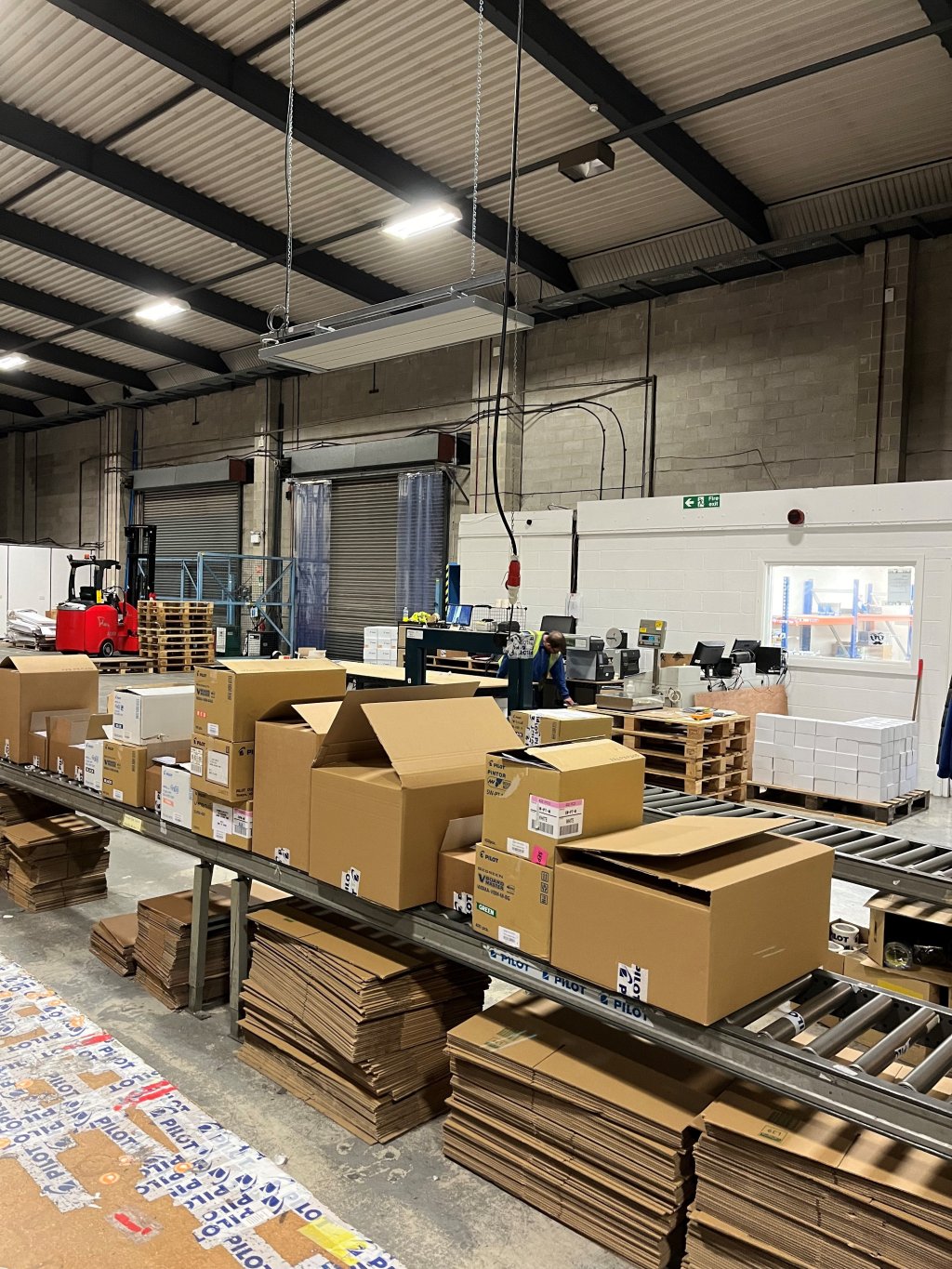
EEZ Medium Wave Infrared heater over packing area.

Heating Smarter: Zoning, Infrared and Intelligent Controls 

Alongside the shift to more efficient heat sources, smarter management of how and when heat is delivered can deliver meaningful reductions in energy consumption. Key approaches include: 


Zoning

dividing a building into separate heating zones allows different areas to be heated according to their individual occupancy patterns and requirements, rather than heating the whole building to the same level at all times.

Infrared heating

highly effective in spaces where conventional convection heating performs poorly. Infrared solutions are now available for a wide range of commercial applications, from industrial units to wellness spaces and places of worship.

Smart controls and timers

ensuring heating systems operate only when needed, and at the right output level, eliminates a significant source of wasteful consumption.

Taken together, these approaches represent a shift from reactive energy use to strategic energy management. For businesses seeking to reduce heating energy costs across their operations, this combination of technologies and controls offers the clearest path forward. 

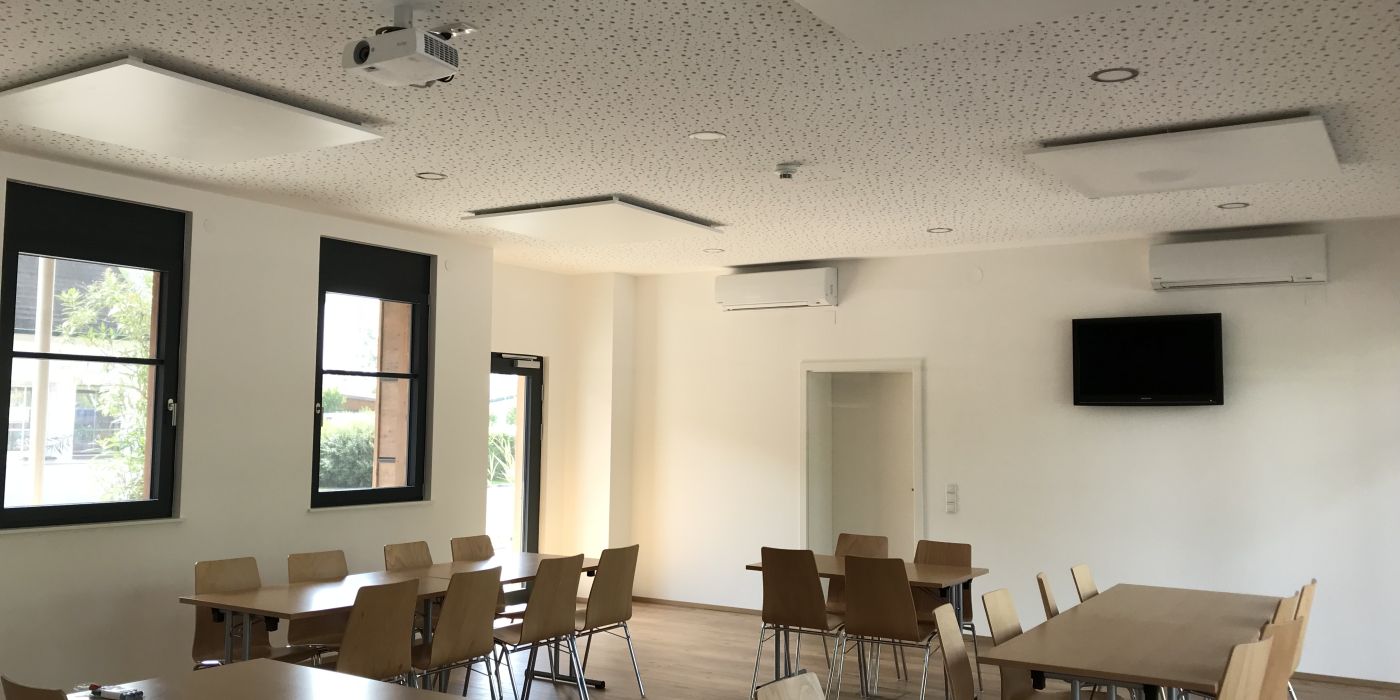
Etherma Fire & Ice system in the living room.

Integrated Energy Solutions: Heating, Cooling and Ventilation 

Forward-thinking organisations are going a step further, looking not just at heating in isolation, but at how heating, cooling and ventilation can be managed as an integrated system. 

Combining heating and cooling into a single, coordinated solution, sometimes described as a fire and ice approach, allows businesses to optimise energy use across the full calendar year rather than managing separate systems with separate inefficiencies. In buildings where ventilation requirements are significant, incorporating mechanical ventilation with heat recovery (MVHR) can further reduce the energy burden by recapturing warmth that would otherwise be lost through extraction. 

This systems-level thinking is increasingly how the most energy-resilient organisations are approaching their built environment. Rather than purchasing products, they are investing in energy efficient heating systems that work together coherently and can be managed holistically. 

Why Sector-Specific Heating Matters 

There is no single heating solution that suits every commercial environment. A strategy that works well for an open-plan office will be poorly suited to a distribution warehouse, just as the approach taken for a gym will differ considerably from that required for a church or a manufacturing facility. 

Each sector brings its own set of challenges: occupancy patterns, ceiling heights, insulation levels, humidity requirements and the nature of the activity being carried out all influence which heating approach will perform best. Getting this right is not just a question of comfort, it has a direct bearing on energy efficiency and, therefore, on operating costs. 

ARC's Sector Specific Heating Solutions are designed around this reality. Whether the challenge is a poorly heated heritage building, an energy-hungry industrial space or a wellness facility seeking to create a precise thermal environment, the starting point is always the specific requirements of that space and the people who use it. 

Act Now — Before the Next Price Spike 

Businesses that rethink their heating strategies now will be better insulated from future energy price shocks. Those that continue with legacy systems, inadequate controls and piecemeal heating solutions will find themselves increasingly exposed every time market conditions tighten. 

The goal is not to find the cheapest solution for today. It is to build a heating strategy that performs efficiently, adapts to occupancy and use, and reduces dependence on unpredictable energy markets over the long term. 

If your business is ready to take a more strategic approach to heating, ARC can help. From initial assessment through to system design and installation, we work with organisations across a wide range of sectors to deliver heating solutions that are built for the real world — including the world of volatile energy prices.