Consent

This site uses third party services that need your consent. Learn more

Skip to content
EX
VAT
INC
VAT
Shop now
Login

Article

How Cold Warehouses Damage Productivity and How Infrared Solves It

Your warehouse team isn't slow because they lack motivation. They're slow because their hands don't work properly at 4°C. 

Cold fingers fumble barcodes. Stiff hands misplace items. Workers in multiple layers move cautiously, take longer at each pick, and make avoidable errors. What looks like a performance issue is actually a temperature problem and it's costing you more than you think. 

The Real Cost of Cold 

Cold environments don't just make people uncomfortable. They directly degrade the physical and mental capabilities your operation depends on. 

Reduced dexterity is the most immediate impact. When core body temperature drops, blood flow to extremities reduces. Fingers lose fine motor control. Tasks that should take seconds; scanning barcodes, handling small components, operating touch screens, become awkward and slow. Research shows manual dexterity can drop by 50% or more in cold conditions.
Slower movement follows naturally. Staff wearing extra layers to stay warm sacrifice mobility. Bulky clothing restricts reach and movement speed. What should be fluid motion through pick routes becomes careful, restricted progress. Every additional second per pick compounds across thousands of daily transactions.
Increased errors are inevitable when people can't feel what they're doing properly. Mis-picks rise. Packing mistakes increase. Items get damaged because cold hands can't grip securely. Your accuracy metrics suffer not because training is inadequate but because the working environment undermines basic manual competence.
Fatigue sets in faster when the body is constantly working to maintain core temperature. Staff tire more quickly, concentration drops, and the afternoon shift becomes noticeably less productive than morning. By hour six or seven, performance has degraded significantly.
Morale declines when people feel management doesn't care about basic comfort. A cold warehouse sends a clear message: productivity matters more than people. Staff retention suffers. Absenteeism rises. The best workers look for better conditions elsewhere, especially problematic when you're trying to recruit seasonal staff for peak periods.
Safety risks increase as cold affects judgment and reaction time. Forklift operators make poorer decisions. People rushing to finish quickly and get warm take shortcuts. Slips and trips rise because stiff, cold muscles don't respond as effectively.

This isn't about mollycoddling. It's about recognising that cold environments directly damage the operational capabilities you're paying for. 

Peak Season Can't Afford Cold 

December through February is when your warehouse earns its keep. Order volumes surge. Every hour of productivity matters. Staff need to maintain speed, accuracy, and focus throughout extended shifts. 

This is precisely when cold becomes most operationally damaging. You can't afford the dexterity loss. You can't tolerate the error rates. You can't absorb the productivity drop that comes when people are working in conditions that undermine their physical capability. 

Peak season demands your team performs at their best, but they can't deliver that performance when they're cold. 

Why Traditional Heating Fails Warehouses 

The natural response is to install conventional heating. Gas-fired unit heaters, warm-air systems, or destratification fans that try to create a uniform temperature throughout the building. 

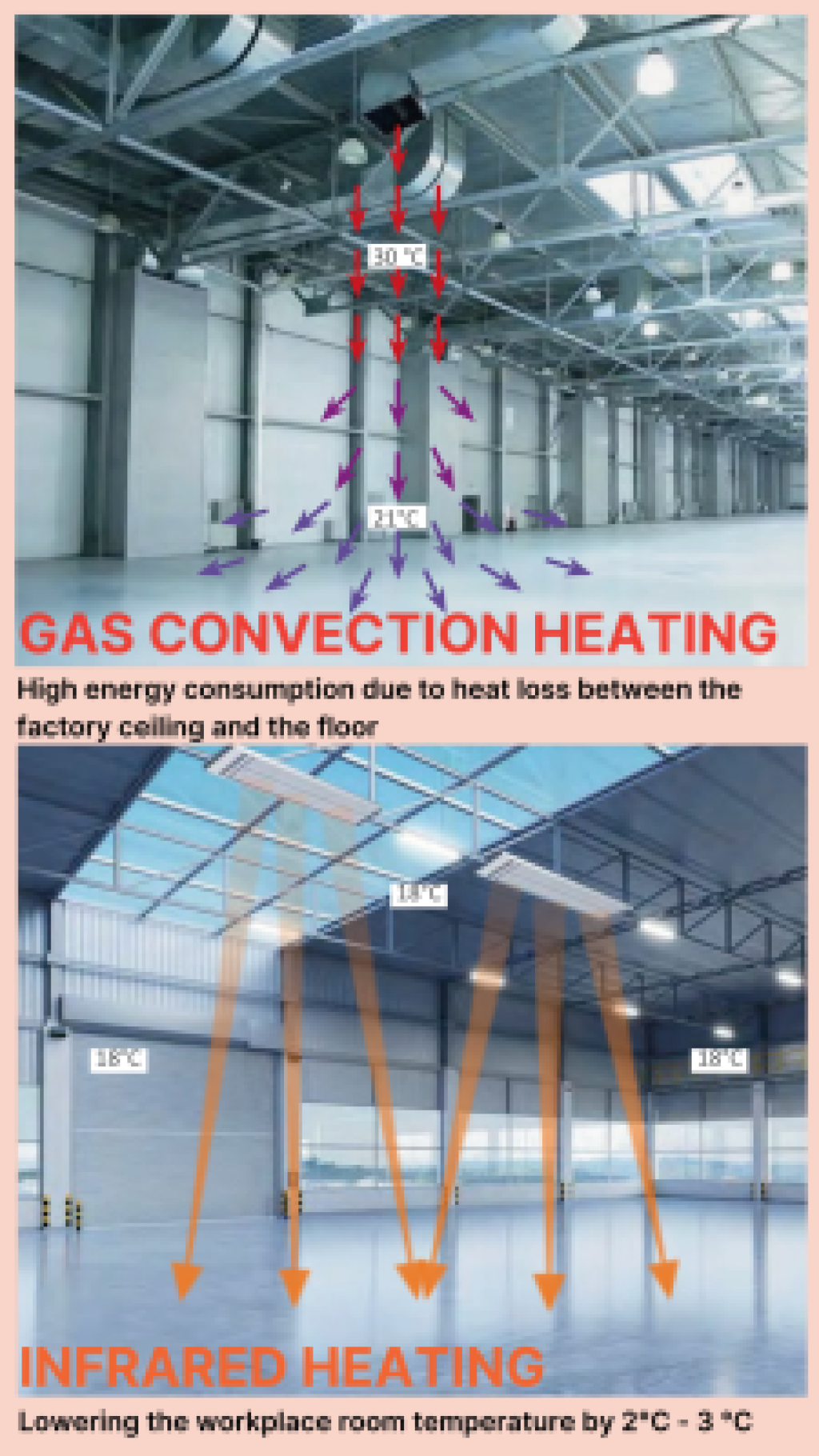
The problem is simple physics. Warm air rises. In a warehouse with 8-12 metre ceilings, your heating system spends most of its energy warming the upper cubic volume, the useless space above racking where nobody works. The warmth your staff needs stays stubbornly out of reach near the roof. 

Worse, warehouse environments are inherently draughty. Loading bay doors open constantly. Roller shutters let in cold air. Every opening is a thermal breach. Traditional heating systems fight a perpetual losing battle, constantly trying to replace warm air that escapes, using enormous energy to achieve mediocre results at ground level where people actually work. 

You end up with high energy bills, uncomfortable staff, and a system that fails precisely when it's needed most, during busy periods when doors stay open longest. 

How Infrared Restores Performance 

Infrared heating works on a completely different principle. Instead of trying to warm air, it delivers radiant heat directly to people and surfaces, the same way sunlight warms you on a winter day even when the air temperature is cold. 

Direct warmth means your staff feel comfortable immediately in their work zones. A picker at their face feels the heat. A packer at their station stays warm. The heating energy goes to the people doing the work, not to empty air or high racking.

Fast comfort matters operationally. Infrared panels reach working temperature in minutes. Staff starting morning shifts don't spend the first hour waiting for the building to warm up. You get productive work immediately.

Stable warmth persists even with doors open. Because infrared heats people and surfaces rather than air, the comfort your team experiences don't vanish when a loading bay door opens. Traditional systems lose their effect instantly, infrared maintains consistent working conditions throughout high-traffic periods.

Effectiveness in draughty buildings is where infrared particularly excels. Cold air movement doesn't matter when you're not relying on warm air to provide heat. Your warehouse can be naturally ventilated, doors can open and close constantly and staff remain comfortable because the heating mechanism isn't disrupted by air movement.

Cost efficiency comes from eliminating wasted heating. You're not warming vast unused volumes. You're not constantly replacing lost warm air. Energy consumption typically drops 50-70% compared to whole-building systems while delivering better comfort where it matters, at ground level in work zones.

The operational result is straightforward: warm hands work faster, make fewer mistakes, and maintain performance throughout the shift. 

Solar Pairing for Long-Term Economics 

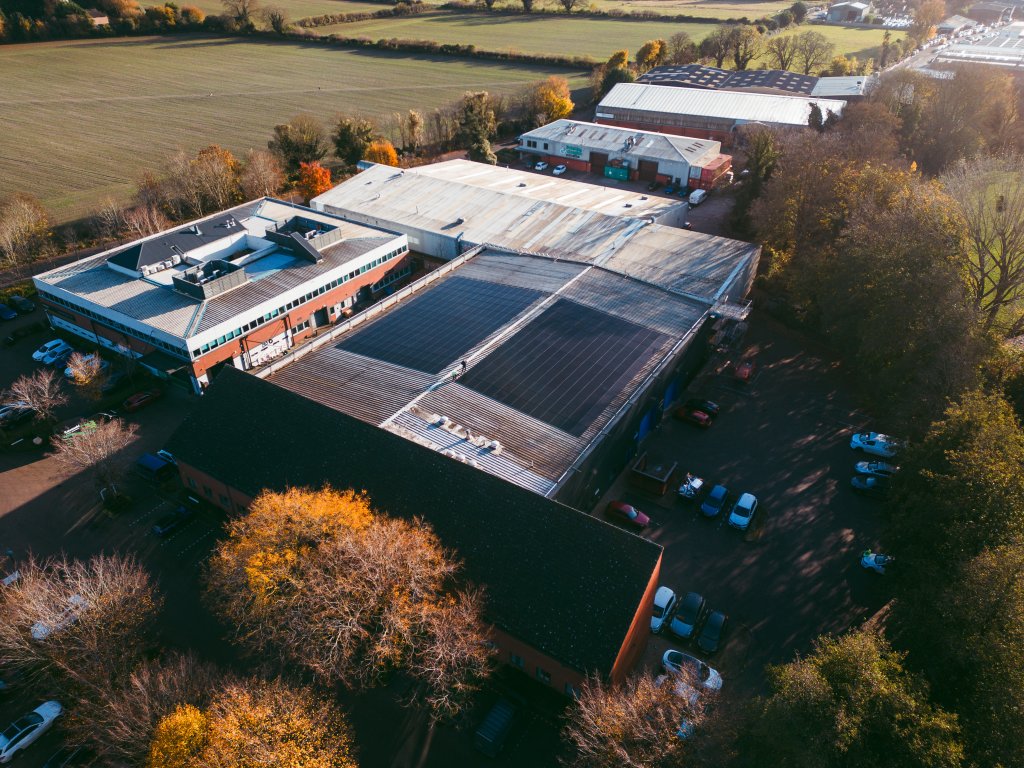
Most warehouse roofs offer excellent conditions for solar PV installation, large, unshaded areas with good orientation. When combined with efficient infrared heating, the economic case becomes compelling. 

Solar generation offsets heating costs during daylight operation. Your roof produces power that directly reduces the running cost of keeping staff comfortable. Typical installations achieve payback in 6-8 years, after which the energy is essentially free. 

You're addressing both immediate comfort needs and long-term sustainability while improving your operational cost structure. The combination transforms a liability, heating costs, into an increasingly manageable fixed investment with declining marginal costs over time. 

The Productivity Equation 

Cold warehouses don't just create comfort complaints. They directly damage the physical and mental capabilities that drive operational performance. 

Staff with warm hands work faster. They make fewer errors. They maintain concentration longer. They stay with you during peak season rather than looking for better conditions elsewhere. 

Infrared heating solves the core problem: it puts warmth where people work, maintains that warmth in real warehouse conditions, and does so at a fraction of the energy cost of trying to heat the entire building. 

This isn't about luxury. It's about recognising that your productivity depends on people performing manual and cognitive tasks that cold environments directly undermine. 


Improve staff comfort to protect productivity during winter. 

Book a free consultation 

Related resources

Browse content related to “How Cold Warehouses Damage Productivity and How Infrared Solves It”